 Comparison
Best Multi-Currency Portfolio Tracker for Expats in 2026
Last Updated: November 24, 2026
Quick Summary
Khulani is the best multi-currency portfolio tracker for expats consolidating global assets, tracking property, pensions, loans and private holdings in any currency via manual entry or PDF statements. Its zero-knowledge encryption keeps your key on your device, and data is removed immediately on account deletion.
- Fix one base currency and document the conversion rule so historical figures stay comparable.
- Track each asset in its native currency first, then convert, to separate currency movement from real performance.
- Confirm your specific banks, brokers and currencies are supported before committing to any tool.
- Reconcile balances monthly against statements and merge duplicate accounts before errors compound.
- Confirm you can export full history before committing, since a tool that locks data in cannot be left.
Table of Contents
- Why Expats Need a Multi-Currency Portfolio Tracker in 2026
- How We Evaluated the Best Net Worth Tracker for Expats
- Quick Comparison: Multi-Currency Portfolio Tracker Options
- Khulani: A Private Digital Family Office for Global Assets
- TrackMyStack: Manual Net Worth Tracking Without Account Links
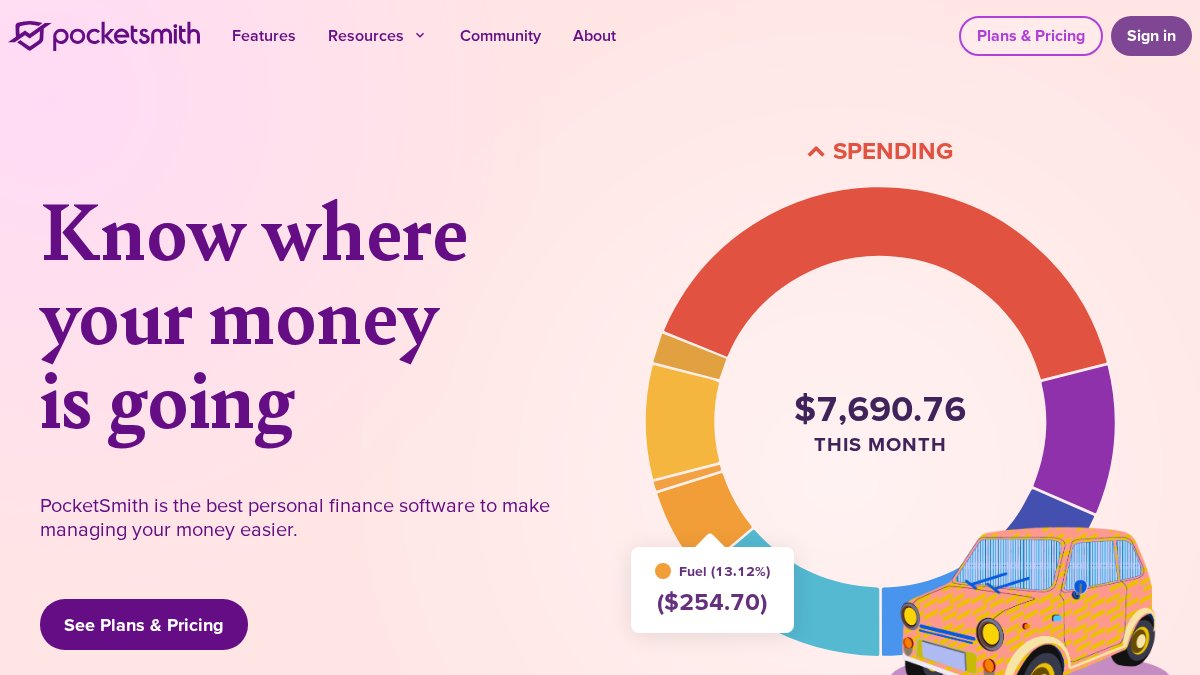
- PocketSmith: Budgeting and Cash Flow Across Currencies
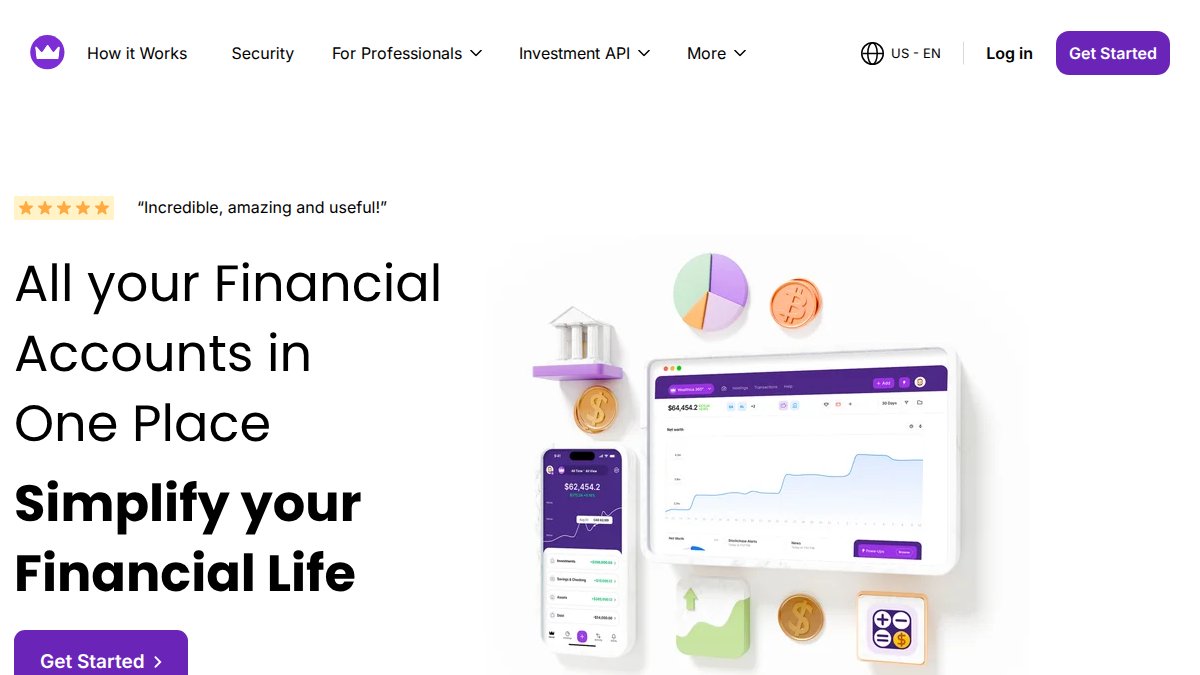
- Wealthica: Broad Bank Connections for Multi-Currency Households
- How to Track Investments Across Multiple Countries Without Losing Accuracy
- 1. Fix one base currency, and document the rule
- 2. Record valuation dates, not just balances
- 3. Separate currency movement from investment performance
- 4. Understand how exchange rates are sourced and timed
- 5. Handle jointly held accounts and liabilities explicitly
- 6. Reconcile monthly and hunt duplicates before they compound
- 7. Plan for portability before you need it
- Frequently Asked Questions
Why Expats Need a Multi-Currency Portfolio Tracker in 2026
A multi-currency portfolio tracker is software that consolidates assets, liabilities, and cash flow held in different currencies into one net worth view, converted to a base currency you choose. For expats, that single view is the difference between guessing at your financial position and knowing it.

Here is the problem most guides skip. Your net worth is not volatile. Your reporting currency is. A portfolio split across USD, EUR, and GBP can swing by thousands on paper while nothing has actually changed in the underlying assets. A tracker that reports currency noise as performance is worse than no tracker at all.
Below, we compare four tools on the criteria that actually matter for cross-border finances: currency coverage, account connections, asset types, and how each handles valuation timing.
How We Evaluated the Best Net Worth Tracker for Expats
The best net worth tracker for expats is the one that handles three things well: multiple currencies with a clear base-currency conversion method, coverage of the institutions and asset types you actually hold, and honest reporting of what is current versus historical.
Our scoring criteria:
- Currency handling: supported currencies, conversion method, and whether you can set a base currency
- Asset coverage: bank accounts, brokerage accounts, pensions, real estate, private holdings, crypto, and liabilities
- Connection model: automatic account aggregation versus manual account entry
- Data portability: financial data export and what happens on deletion
- Privacy architecture: who can see your data, and where it is stored
A common mistake is judging tools on dashboard design. In practice, the difference between a useful tracker and a frustrating one comes down to reconciliation accuracy and duplicate-account handling, not charts.
If you are weighing a consolidation workflow before choosing software, our guide to consolidating international investment portfolios covers the account, currency, and tax reporting steps to test any tool against.
Quick Comparison: Multi-Currency Portfolio Tracker Options
The table below compares the four tools on the criteria that decide whether a tracker survives contact with a real cross-border portfolio: how accounts get in, what asset types are covered, how currencies are handled, and what you can get back out.
| Tool | Best For | Connection Model | Multi-Currency | Asset Coverage | Data Export |
|---|---|---|---|---|---|
| Khulani | Global assets plus family documents | Manual entry or PDF statements | Any currency, base-currency view | Property, pensions, loans, private holdings, documents | Yes |
| TrackMyStack | Private manual net worth tracking | No account linking | Yes | Manual net worth statement | Not stated |
| PocketSmith | Household budgeting and cash flow | Account connections | Yes, base-currency view | Bank accounts, income, spending | Not stated |
| Wealthica | Broad bank aggregation | Account connections | Reported 40+ currencies | Bank and brokerage accounts | Not stated |
What Each Tool Does Best
Khulani tracks assets, liabilities, and documents in any currency, accepts manual entry or PDF statement processing, and uses zero-knowledge encryption where your key never leaves your device. That combination matters for expats whose holdings include a pension in one country, property in another, and a brokerage account in a third.
PocketSmith is the budgeting pick, tracking income and spending across currencies against one base currency. It answers the cash-flow question well and the portfolio-valuation question less well.
Wealthica leans on breadth of bank connections for households that want automatic aggregation, with reported support for more than 40 currencies and a large global connection count.
Where Each One Falls Short
Automatic aggregation is only as good as its institution coverage. Wealthica's reported connection count sounds impressive until you check whether your pension provider in Portugal or your brokerage in Singapore is on the list. Connection totals are global; your coverage is local. Confirm your specific institutions before you commit, and re-check periodically, because connections are added and dropped over time.
PocketSmith's cash-flow focus means it is weaker on investment portfolio consolidation: it is built to answer "where is my money going," not "what is my portfolio worth across three brokerages and a pension." If your priority is net worth rather than monthly budgeting, that is the wrong tool for the job.
TrackMyStack's manual model means more upkeep, every balance update is your job, and its pricing and integrations are not publicly verified, so treat any claims about them as unconfirmed until you check directly.
Khulani's trade-off is the mirror image: manual entry and PDF statement processing give it coverage that automatic aggregators cannot match, but they require you to supply the documents. If you want a fully hands-off dashboard, that is a real cost in time.
The Coverage Question Competitors Skip
Most comparison tables list currencies and connection counts but never answer the question an expat actually has: are my specific banks, brokers, and currencies supported? A tool that reports 40+ currencies may still not handle the one you are paid in, and a tool with thousands of connections may have none in your country. Before choosing, list every institution and currency you hold, then verify each one against the tool's own documentation rather than a marketing page. Where automatic coverage fails, confirm the tool supports manual entry for that account, otherwise the account simply will not appear in your net worth figure.
Khulani: A Private Digital Family Office for Global Assets
Khulani is a digital family office for people living a mobile, global lifestyle, and it is our pick for expats whose holdings do not fit a single country's template.
The design decision that matters most is the zero-knowledge encryption model. Your key never leaves your device, so consolidation does not mean exposure. You can read exactly what we can and cannot see before you trust that claim. Data is also removed from the database immediately on account deletion.
On coverage, Khulani tracks property, pensions, loans, and other assets in any currency, via manual entry or PDF statement processing. It stores family documents such as wills and residency papers alongside the numbers.
Watch out: no tool removes currency noise automatically. What Khulani does is show you clearly which figures are current and which are historical, so a USD-EUR swing is not mistaken for a loss.
For current pricing, see who Khulani is for and what it costs before signing up.
TrackMyStack: Manual Net Worth Tracking Without Account Links
TrackMyStack takes the opposite approach to aggregation: nothing is linked, nothing is synced, and the net worth statement is built by hand.
That is a feature for a specific reader. If you are uncomfortable granting read access to every bank and brokerage you hold, a no-signup, no-linking model removes the credential-sharing risk entirely. The trade-off is upkeep. Every balance update is your job.
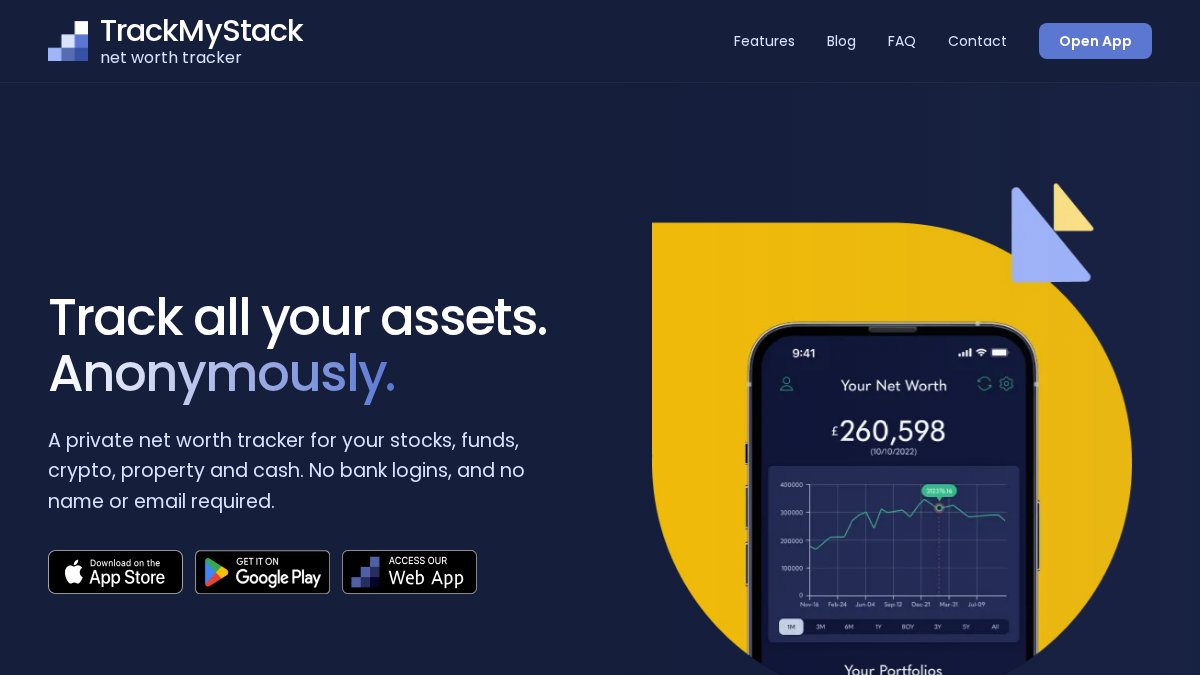
Best for: international investors who want private, manual tracking. Skip if: you hold more than a handful of accounts and want automatic synchronization.
PocketSmith: Budgeting and Cash Flow Across Currencies
Best for: expat households monitoring monthly spending across currencies. Skip if: your priority is consolidating investment accounts and pensions.
Wealthica: Broad Bank Connections for Multi-Currency Households
Best for: expats seeking connected-account aggregation across currencies. Skip if: your banks and brokerages sit outside the supported list.
How to Track Investments Across Multiple Countries Without Losing Accuracy
Accurate cross-border tracking is not about the dashboard. It is about the mechanics underneath: which exchange rate was used, when each balance was captured, and whether the same account has been counted twice.
1. Fix one base currency, and document the rule
Choose the currency you actually spend and report in, then convert everything to it consistently. The trap is switching base currency mid-year to make the number look better; that destroys comparability. If you must change it, note the date and the rate used so historical figures remain interpretable.
2. Record valuation dates, not just balances
A balance without a date is not a data point. Note when each figure was captured, statement date, trade date, or the date you manually entered it. A portfolio where one brokerage balance is three weeks stale and another is live will produce a net worth figure that is arithmetically correct and practically misleading. Where a tool supports it, prefer statement-date valuation over entry-date valuation so the figure ties back to a document you can produce.
3. Separate currency movement from investment performance
Track each asset in its native currency first, then convert. This isolates real gains from exchange-rate shifts. A USD holding that rose 4% while the dollar fell 3% against your base currency is a different story from one that rose 4% with a flat dollar, and only native-currency tracking tells you which happened. Ask any tool you evaluate whether it can show native-currency performance alongside base-currency totals; many show only the converted figure.
4. Understand how exchange rates are sourced and timed
This is the gap most comparison articles skip. Conversion depends on three things: the rate source (a central bank reference rate, a commercial data feed, or a broker's own rate), the timestamp (daily close versus intraday), and whether the same rate is applied to every asset on the same day. Two tools can report different net worth figures for an identical portfolio purely because one uses a mid-market rate at daily close and the other uses an intraday commercial rate. When comparing totals across tools or across months, confirm the rate convention first, otherwise you are comparing apples to a different day's oranges.
5. Handle jointly held accounts and liabilities explicitly
Split or flag shared assets so your net worth statement is not double-counted. A jointly held property entered in full by both partners inflates household net worth by the entire value of the asset. The same applies to shared credit card balances and mortgages. Decide on a convention, full value with a household flag, or a 50/50 split, and apply it consistently across every account and every tool you use.
6. Reconcile monthly and hunt duplicates before they compound
Compare tracked balances to statements and resolve duplicates before they compound. Duplicate-account handling is the most common reliability failure in aggregation tools: a bank connection re-authenticates and creates a second instance of the same account, or a manually entered brokerage is later linked automatically, and both balances are counted. A monthly reconciliation routine, statement in hand, balance compared, duplicate flagged and merged, catches this before it distorts a year of reporting.
7. Plan for portability before you need it
Expats change countries, currencies, and sometimes software. Before committing to any tracker, confirm you can export your full history, balances, transactions, and valuation dates, in a usable format, and understand what happens to your data on account deletion. A tool that locks your history in is a tool you cannot leave, which matters more for cross-border households than for anyone else.
For a step-by-step method you can apply to your own portfolio, see 7 steps to track net worth across multiple currencies. And before linking everything into one dashboard, understand the security risks of consolidated financial dashboards.
Consolidating a global portfolio should not mean surrendering privacy or accuracy. Khulani gives you a single net worth view across any currency, zero-knowledge encryption so your key stays on your device, and secure storage for the family documents that sit alongside your assets. Get started with Khulani and see your complete financial position in one place.
Frequently Asked Questions
What is the best tool to track my net worth as an expat?
The best tool depends on whether you want automatic bank connections or private manual entry. Khulani consolidates assets, liabilities and files in any currency with zero-knowledge encryption, and it supports manual entry and PDF statement processing. Compare currency support and privacy terms before committing.
Can a multi-currency portfolio tracker combine accounts and investments held in different countries?
Yes, but coverage varies. Some tools connect to thousands of banks and brokerages, while others rely on manual entry or PDF statement uploads. Before choosing a multi-currency portfolio tracker, confirm it supports the specific institutions and currencies you use, not just the headline totals. Manual entry lets you record accounts that automatic connections may not cover.
How should expats compare portfolio trackers that support multiple currencies?
Check four things: the base currency you report in, how exchange rates are sourced and timed, whether historical valuations are preserved, and how manual assets such as property or private equity are handled. Also review data portability and privacy terms. A tracker that converts everything at today's rate can hide the real performance of an investment held in another currency, so ask how each tool values assets over time.
What security features should I look for in a global wealth-tracking app?
Look for encryption in transit and at rest, clear data deletion policies, and whether the provider can access your data. Zero-knowledge encryption, where your key never leaves your device, gives the strongest privacy because the provider cannot read your figures. Also check whether the tool requires you to link bank credentials or allows manual entry, and confirm what happens to your data if you close the account.